AURA is a jewelry website offering a curated collection of quality rings, necklaces, and bracelets with easy browsing and secure shopping.

In today’s modern economy, the terms startup and business are often used interchangeably. However, these two concepts are not exactly the same. While both involve creating a company and offering products or services to customers, their goals, growth strategies, and operating models are very different.
Understanding the startup vs business concept is important for entrepreneurs, students, and professionals who want to start their own venture.
In this article, we will explain what is a startup, what a traditional business is, and the key differences between a startup and a business in simple and easy language.
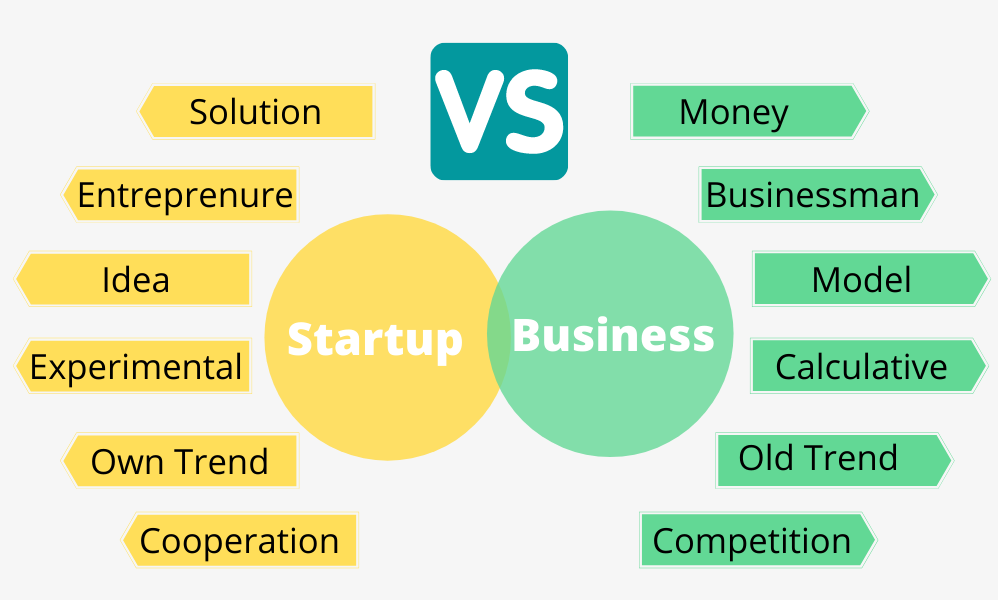
What is a Startup?
A startup is a newly established company designed to develop an innovative product or service and scale quickly in the market.
The main goal of a startup is rapid growth. Startups usually focus on solving a unique problem or introducing something new and innovative to the market.
Most startups begin with a small team, limited resources, and a high level of uncertainty. Their objective is to find a scalable business model that can grow quickly.
For example, companies like Uber, Airbnb, and Facebook started as small startups before becoming global companies.
Key Characteristics of a Startup
A startup usually has the following features:
Startups are commonly found in industries like technology, fintech, healthcare innovation, and artificial intelligence.
What is a Business?
A business is an organization that provides goods or services to customers in exchange for money with the goal of earning profit and sustaining operations over time.
Unlike startups, traditional businesses usually focus on steady and stable growth rather than rapid expansion.
Businesses can be small, medium, or large, and they may operate locally, nationally, or internationally.
Examples of traditional businesses include:
For example, a small bakery or clothing shop in your city is a traditional business, not necessarily a startup.
The main aim of most businesses is consistent revenue and long-term stability.
Startup vs Business: Key Differences
Although both startups and businesses aim to generate revenue, they differ in many ways.
Below is a clear comparison to understand the difference between startup and business.
| Feature | Startup | Traitional Business |
|---|---|---|
|
Content |
Content |
Content |
Feature
Startup
Traditional Business
Main Goal
Rapid growth and innovation
Stable profit
Business Model
Scalable
Usually fixed
Risk Level
High
Moderate
Funding
Investors, venture capital
Personal savings, loans
Innovation.
Very high
Moderate
This table clearly shows how startup vs business models operate differently.
Growth Approach: Startup vs Business
One of the biggest differences between startups and business is growth strategy.
Startup Growth
Startups aim to grow very quickly and often target large global markets. They usually rely on technology to scale their operations.
For example, a startup may create a mobile application or digital platform that can reach millions of users worldwide.
Companies like Instagram and Spotify grew extremely fast because their platforms were scalable.
Business Growth
Traditional businesses generally grow slowly and steadily. They focus on serving a local or regional customer base.
For instance:
These businesses focus on customer satisfaction and stable income rather than rapid expansion.
Innovation: The Core of Startups
Innovation is one of the most important characteristics of a startup.
A startup often tries to create something new or improve an existing solution.
For example:
Traditional businesses, on the other hand, usually operate using established business models.
They may introduce improvements, but their focus is mainly on efficient operations and profitability.
Funding Sources
Another important difference in the startup vs business comparison is how they raise money.
Startup Funding
Startups often need significant funding to grow quickly. They may receive investment from:
In India, initiatives like Startup India encourage entrepreneurship by providing support and funding opportunities.
Business Funding
Traditional businesses usually rely on:
Since their growth is slower, they typically do not require large external funding.
Risk Level
Startups generally involve higher risk compared to traditional businesses.
Because startups try new ideas, not all of them succeed. Many startups fail due to:
However, when a startup succeeds, it can grow into a multi-billion-dollar company.
Traditional businesses are relatively less risky because they operate in proven markets with established demand.
Examples of Startups
Some well-known startups that became global companies include:
These companies started with innovative ideas and rapidly scaled their operations worldwide.
Examples of Traditional Businesses
Examples of common businesses include:
These businesses focus on serving customers consistently and maintaining stable income.
Advantages of Startups
Startups offer several benefits:
However, they also require strong innovation, risk-taking ability, and strategic planning.
Advantages of Traditional Businesses
Traditional businesses offer several key advantages that appeal to many entrepreneurs. They typically involve lower risk compared to high-growth ventures, providing stable and predictable income streams for long-term sustainability. Operations are easier to manage due to their straightforward structures, while fostering strong local customer relationships builds loyalty and repeat business. In fact, many successful entrepreneurs begin with traditional businesses to establish a solid foundation before venturing into more ambitious startups.
Startup vs. business: which one is better? The answer hinges on the entrepreneur’s goals, resources, and risk tolerance. If you aim to create innovative technology, build a company that scales globally, or attract investors, a startup offers the ideal path with its focus on rapid growth and disruption. Conversely, if you prefer stable income, lower risk, and a local market focus, starting a traditional business provides a more predictable route to success. Ultimately, both paths can lead to thriving outcomes when managed effectively with the right strategy.
Conclusion
Understanding startup vs business is essential for anyone interested in entrepreneurship.
A startup focuses on innovation, rapid growth, and scalable solutions, often supported by external investment. A traditional business, on the other hand, prioritizes steady profit, stability, and long-term operations.
Both startups and businesses play an important role in economic development and job creation. The best choice depends on the entrepreneur’s vision, resources, and willingness to take risks.
Whether you start a startup or a traditional business, success ultimately depends on planning, execution, and understanding the needs of customers.

AURA is a jewelry website offering a curated collection of quality rings, necklaces, and bracelets with easy browsing and secure shopping.